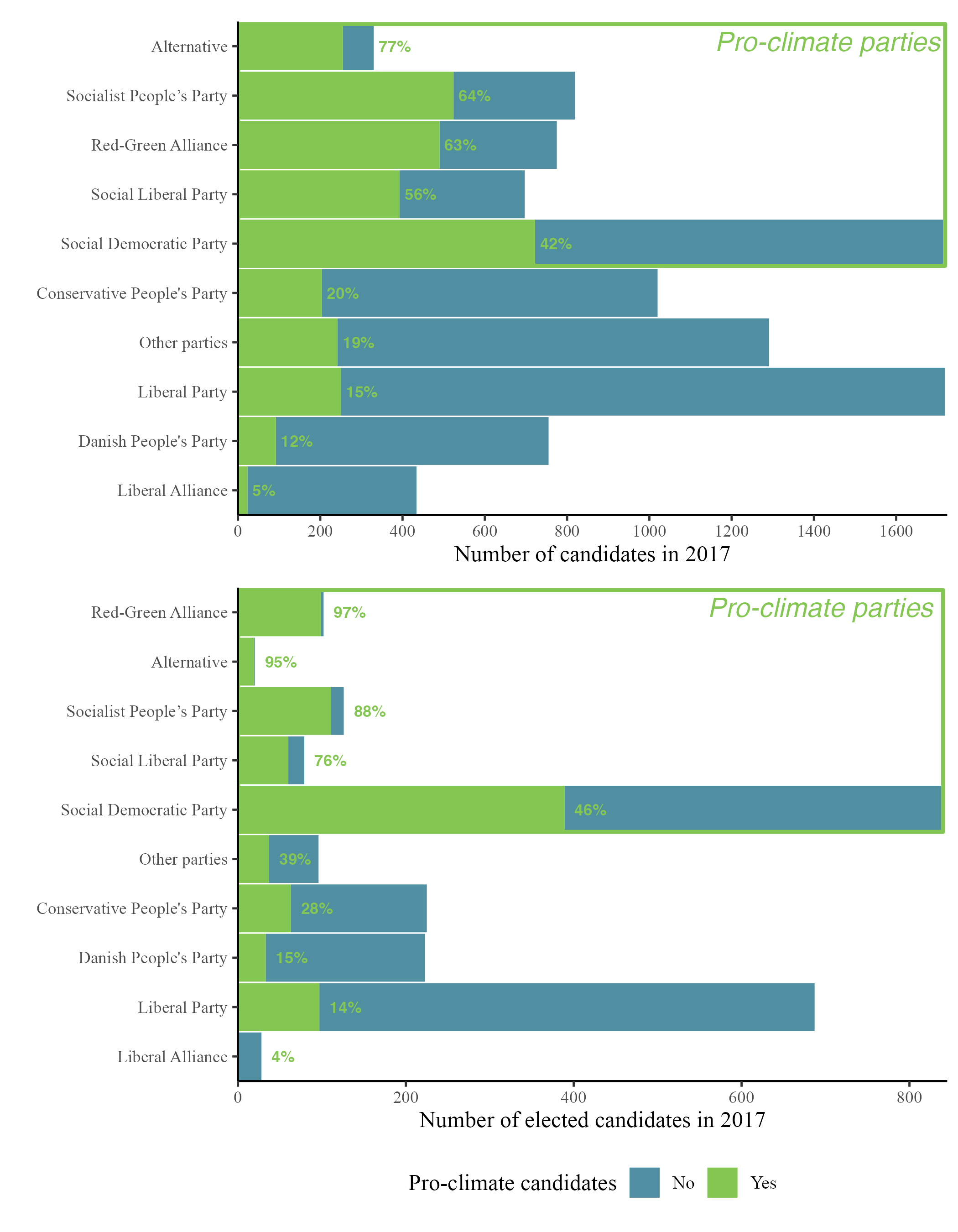
Voting for pro-climate parties and candidates in response to extreme flooding experience
Søren Damsbo-Svendsen
University of Copenhagen
soerendamsbo.github.io
September 22, 2022
The 2013 storm surge in Denmark
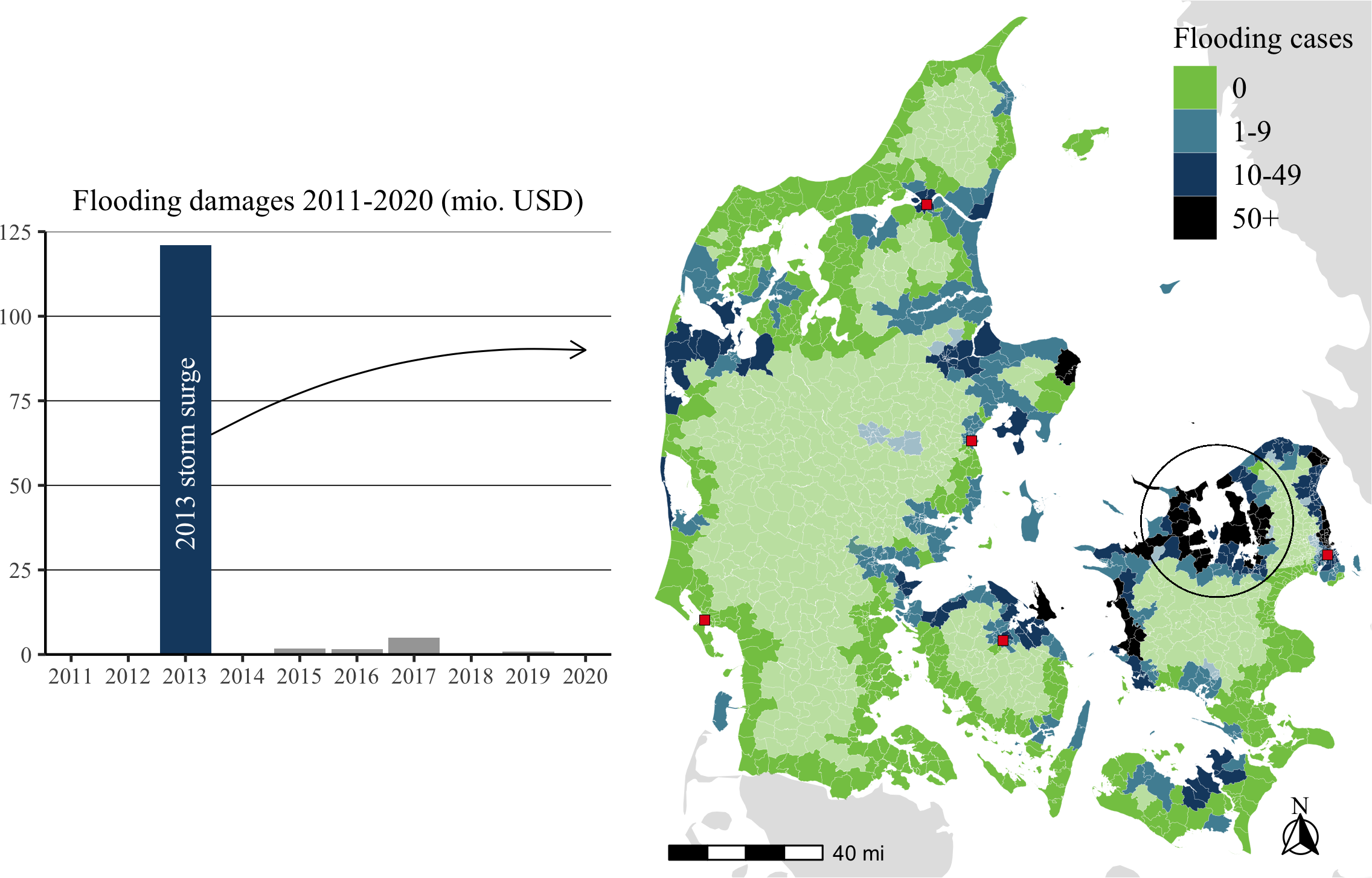
- A rarely harmful and costly weather event → “Hurricane Sandy-equivalent”
- Data: detailed and complete geocoded storm surge insurance cases from the Danish Storm Council
- N = 2,924
Study I: pretreatment balance
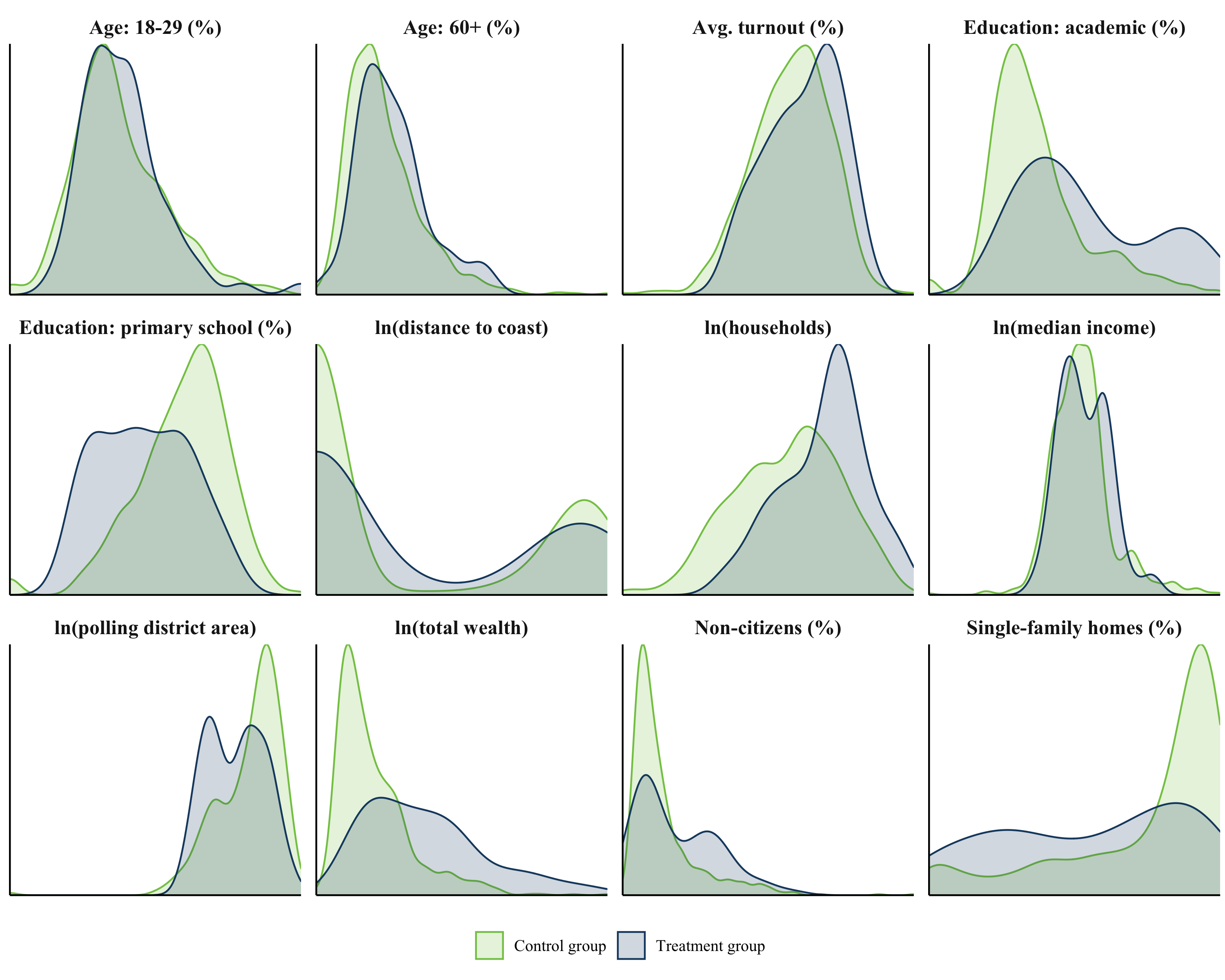
→ flooded and unflooded areas are fairly well-balanced on most covariates
Study I: parallel trends
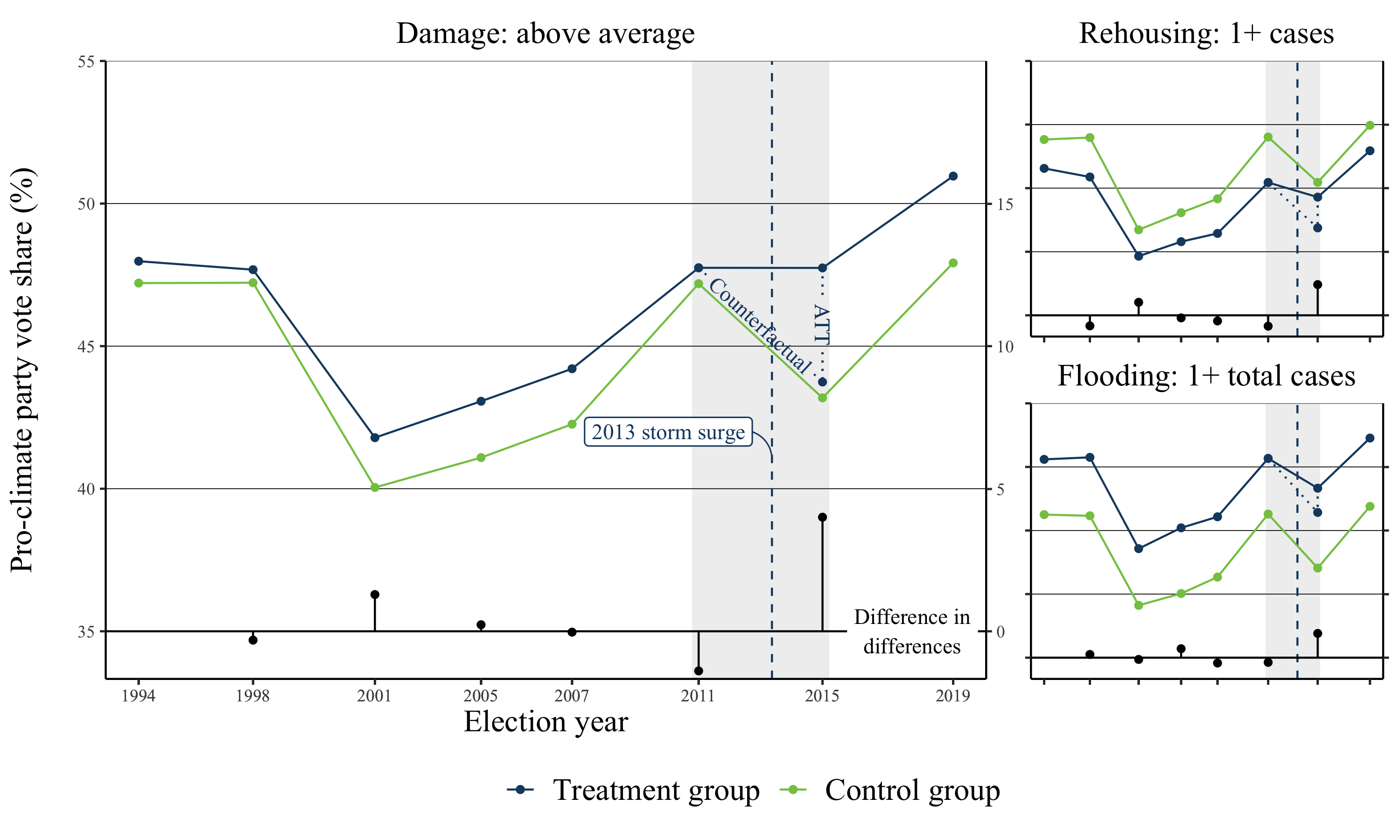
→ generally, parallel pretrends (with some imbalances); 2015 (post) stands out!
Study I: DID results - main
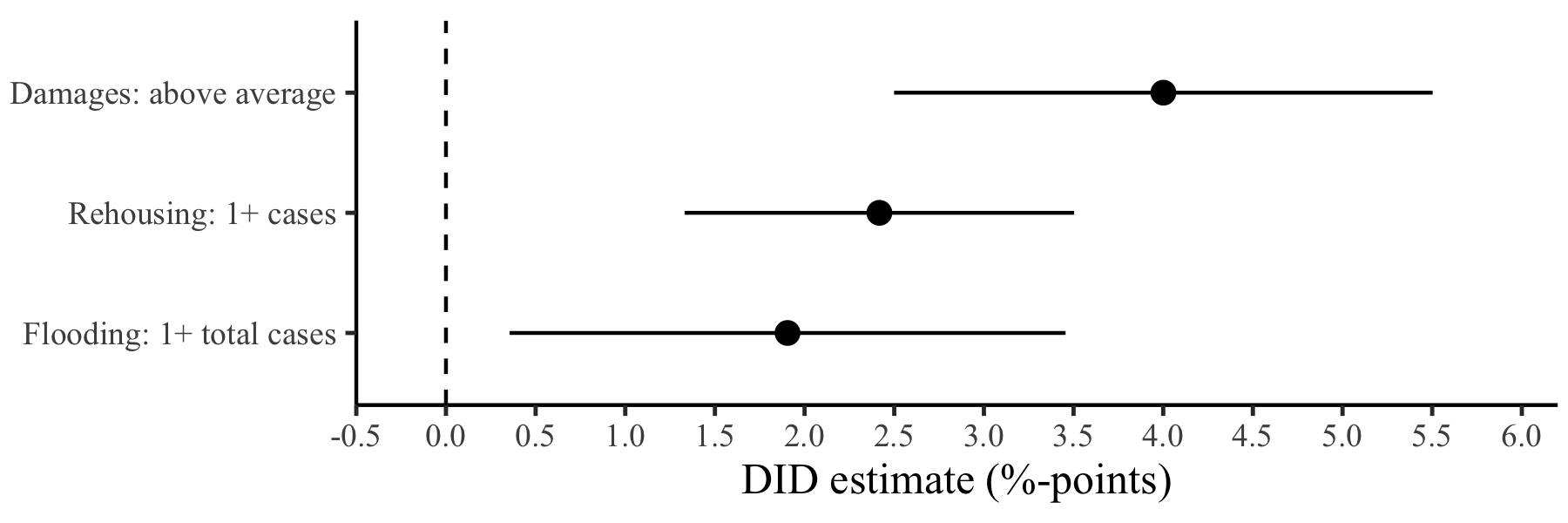
→ flooding effect on pro-climate voting approx. 2-4 %-points
Study I: DID results - flooding intensity
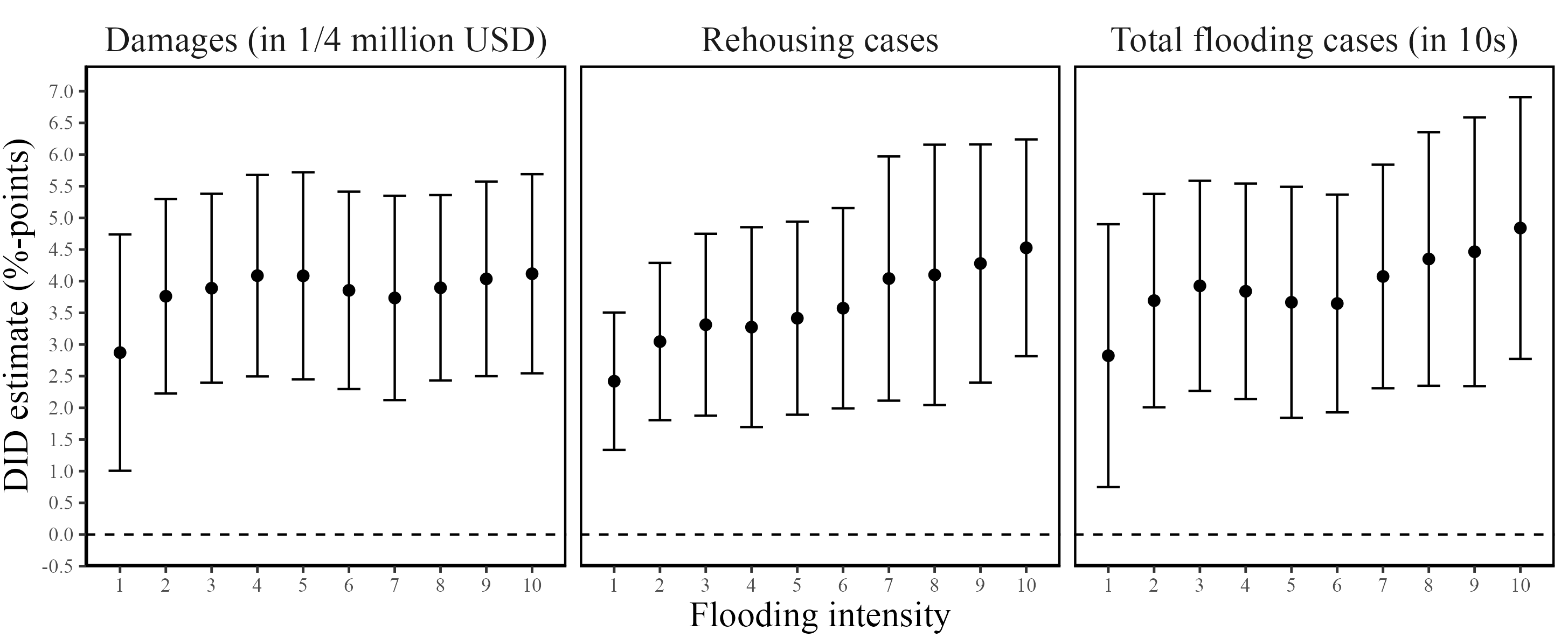
→ flooding effect tends to grow with flooding intensity
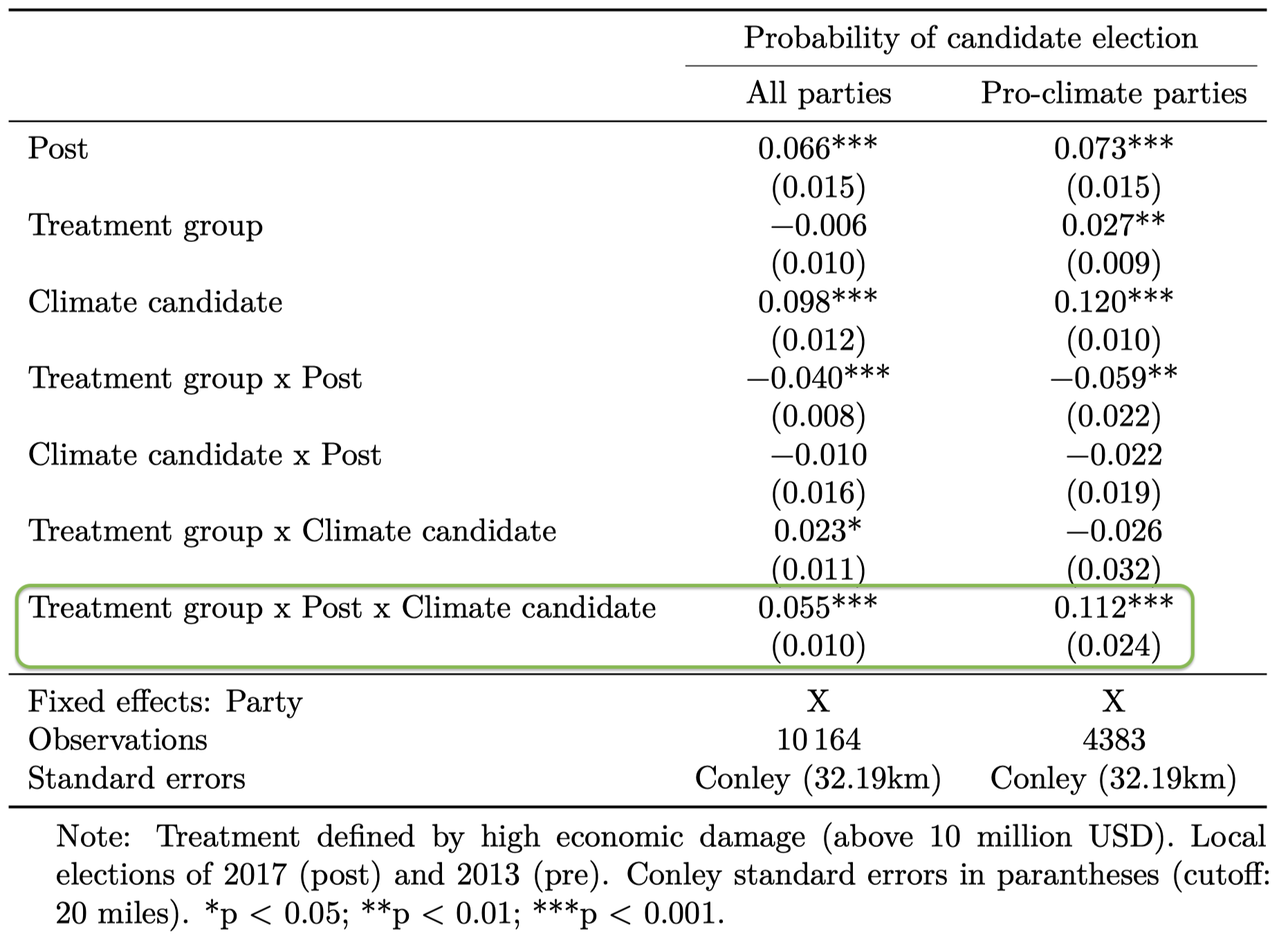
Study II: DIDID results
Study II: DIDID results
DIDID, all parties: approx. 5.5 %-points
DIDID, pro-climate parties: approx. 11.2 %-points
→ pro-climate candidates benefit electorally in post-flooding elections
Study II: DIDID placebo test
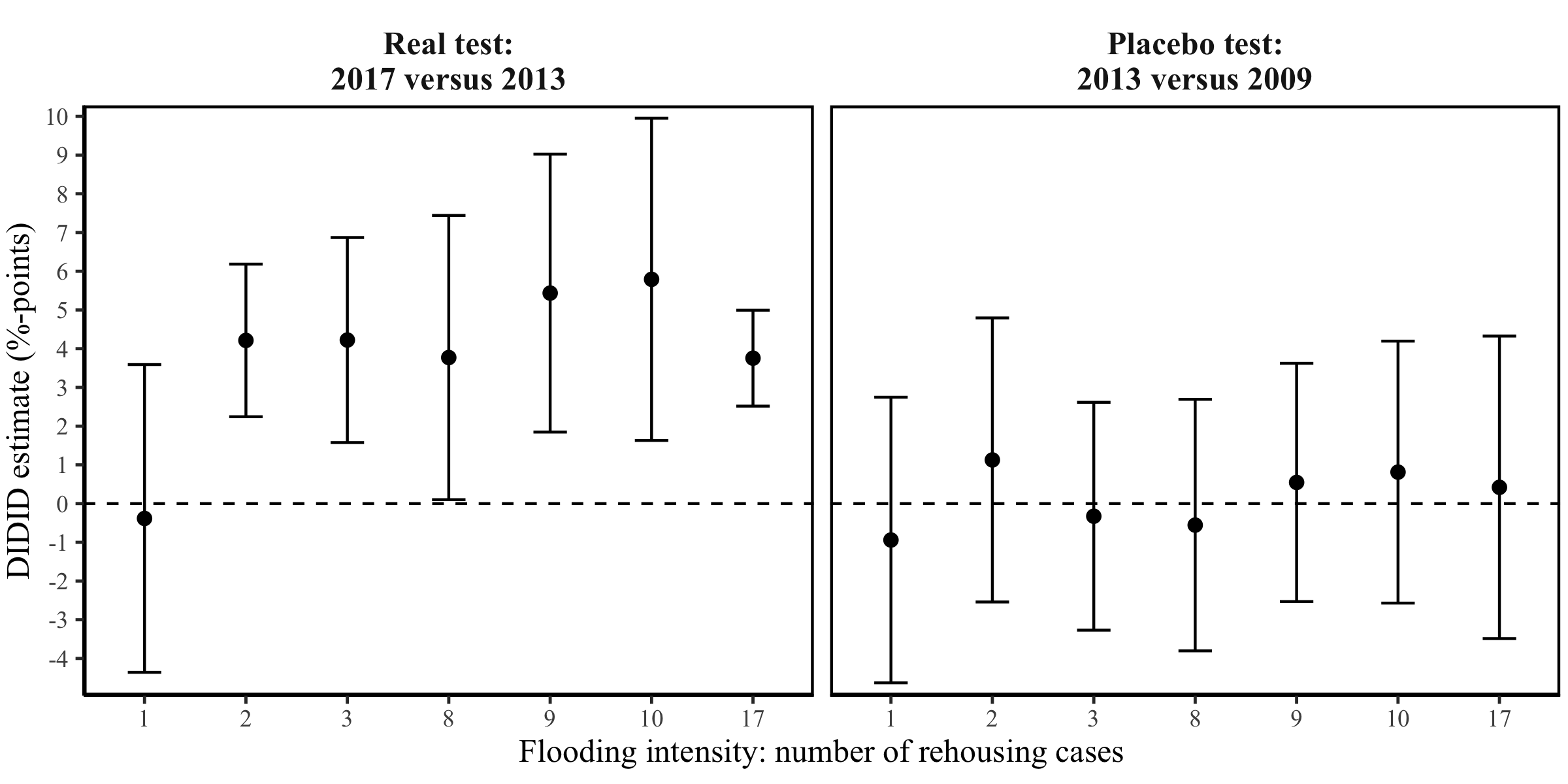
- Clear DIDID effects in real test (>1 rehousing cases)
- No DIDID effects in placebo test
- And also no DIDID for other candidate features: incumbent and pro-welfare
Conclusion 1/2
RQ: How does climate-related extreme weather experience affect pro-climate voting?
- Case: 2013 storm surge and surrounding Danish elections
- Detailed insurance data → local flooding exposure
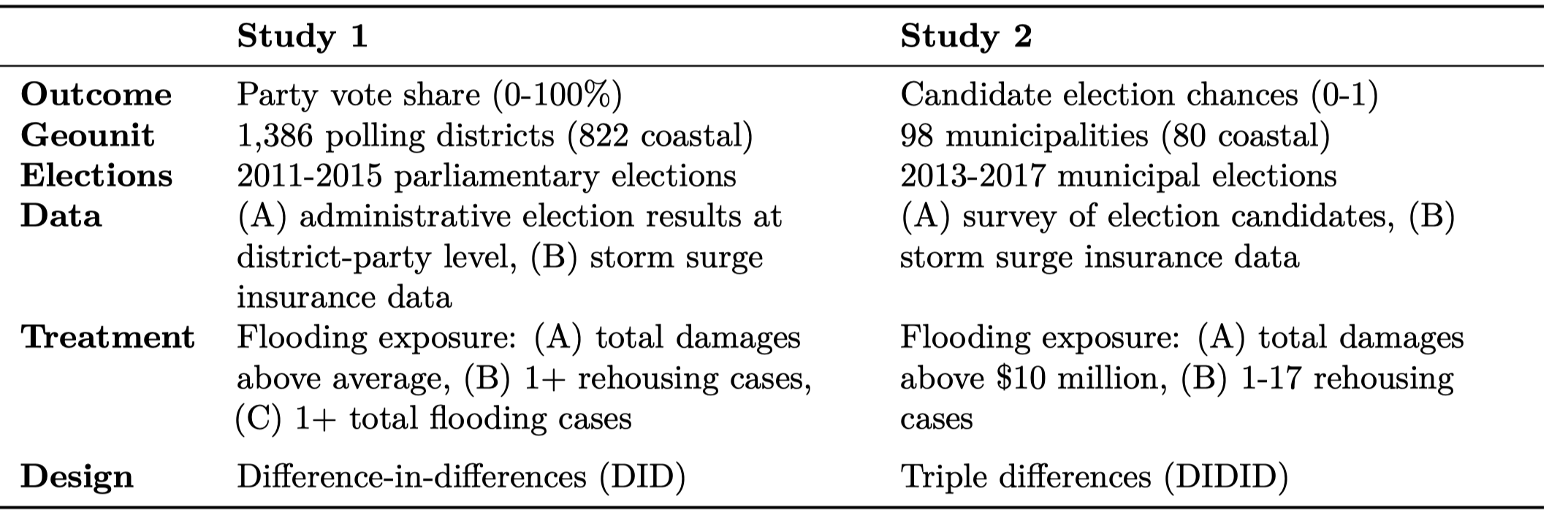
- Twofold empirical study:
Thank you!
→ sdas@ifs.ku.dk

Marco Faria
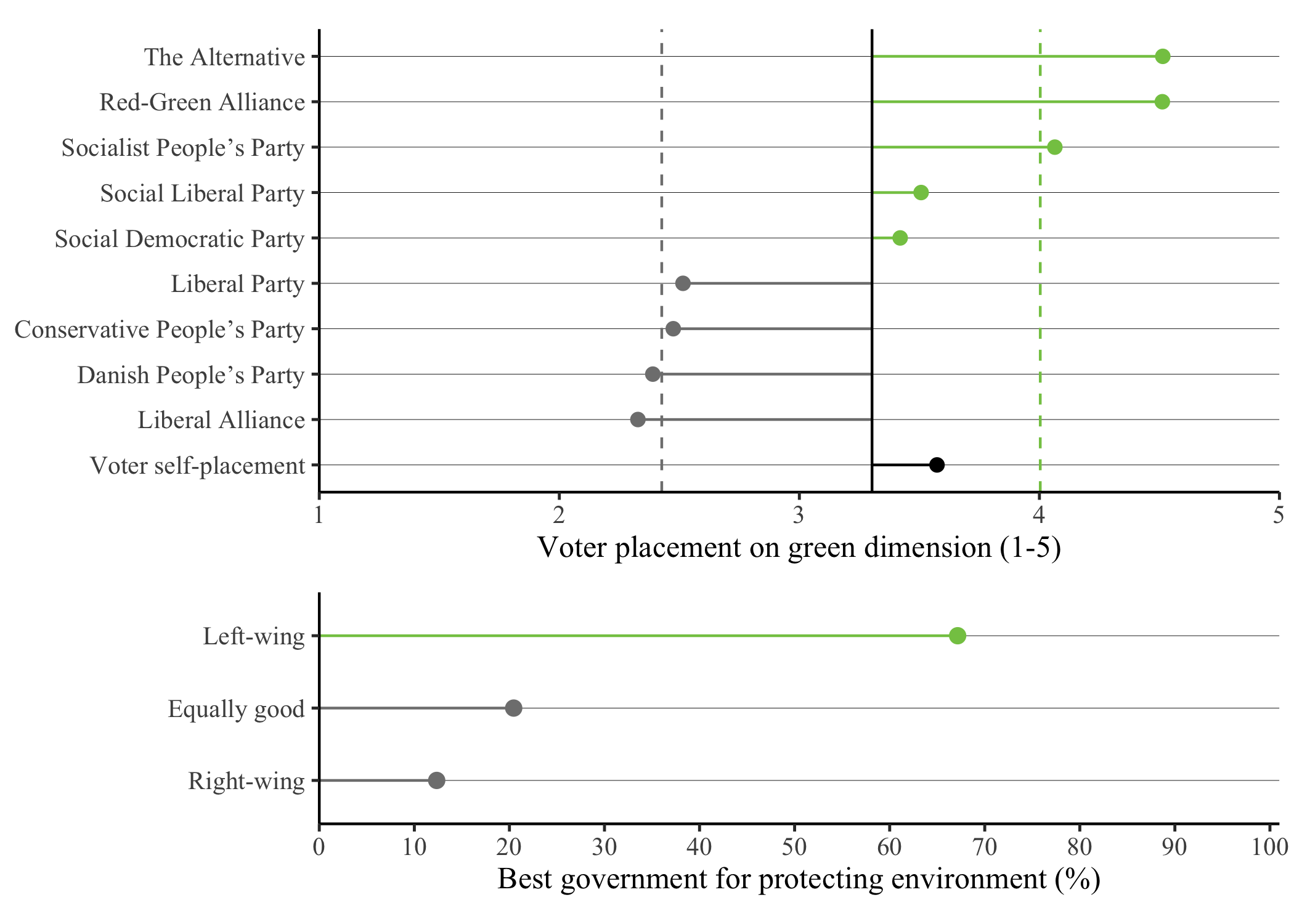
Environmental issue ownership
Study I: DID robustness - event study plots
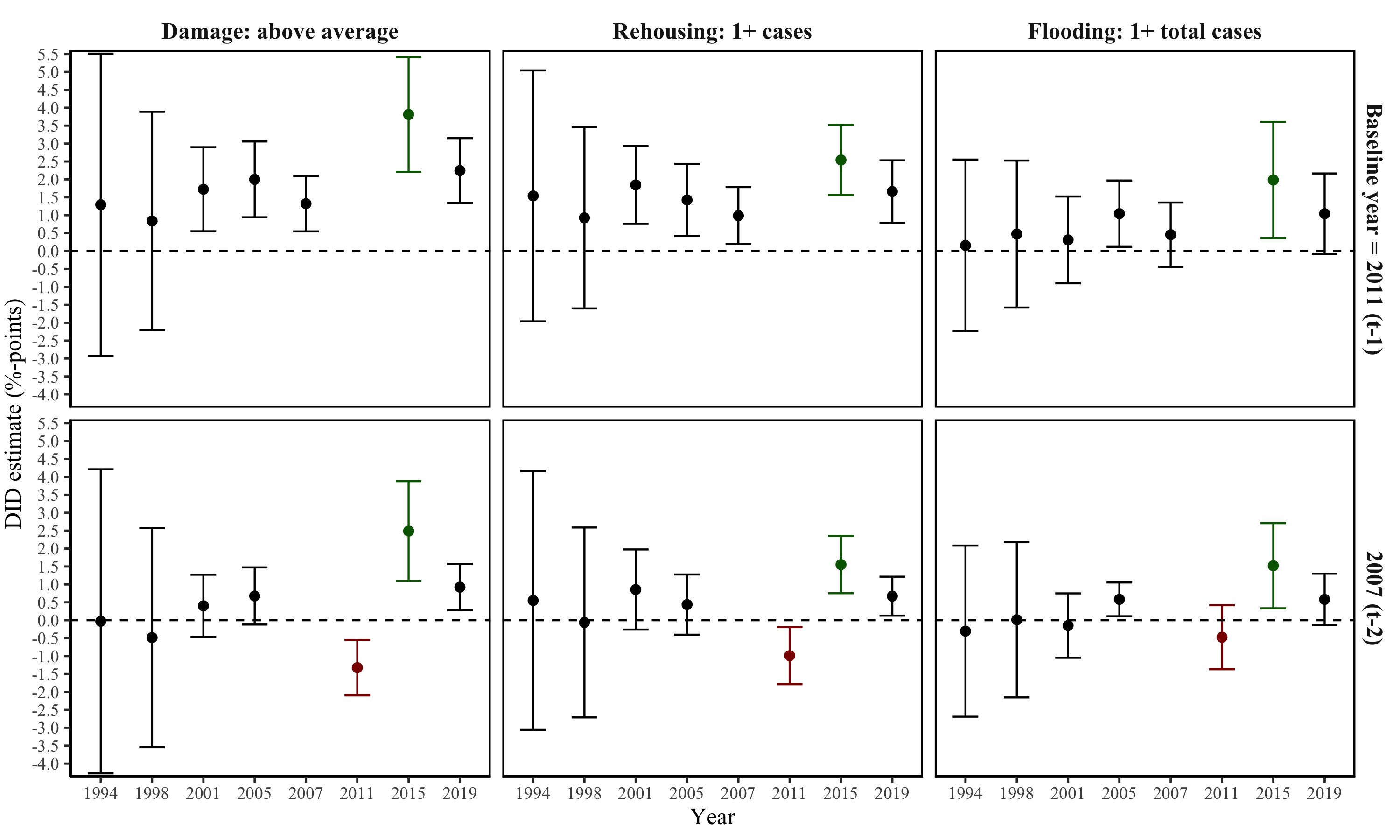
→ some imbalances; 2011 appears to be the odd election
Study I: DID robustness - alternative baseline
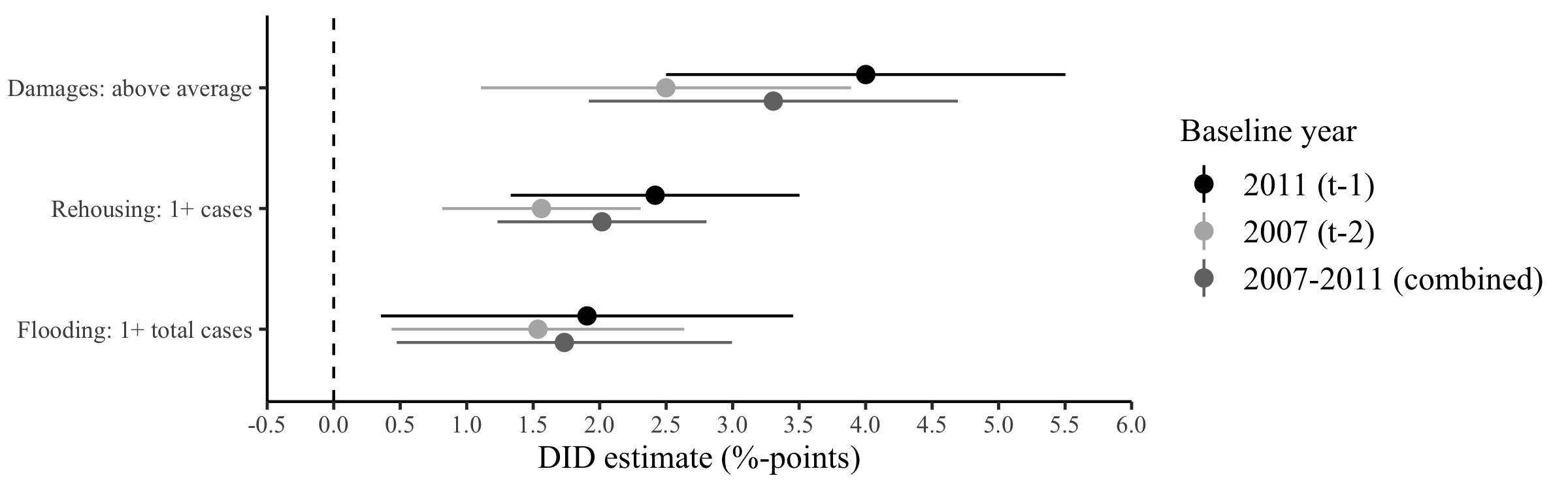
→ with alternative baseline (2007) still flooding effect of at least 1.5 %-points